

Summary
In a thriving work environment, we treat our colleagues like the CEO and treat the CEO like a colleague. Three behavioural patterns are essential for maintaining an egalitarian relationship with bosses.
Treating the highest-paid person’s opinion (HiPPO) as you would a colleague with the same perspective.
Retaining the courage to disagree and dissent with those in positions of power.
Protecting your focus and being able to refuse, defer, reflect or deflect incoming requests from senior people.
A few years back, I wrote about “the CEO test”. Here’s the premise.
“Often there are some behaviours that we take in our stride, even though they are unprofessional and insensitive. These aren’t just barriers to working async-first; they’re also barriers to fostering a respectful team and company environment. A good way to ask ourselves if certain behaviour is OK is to ask, “Would I do that to my CEO?”
If the answer to that is a “Hell, no!”, then we must ask ourselves why we’d do that to any other colleague. We mustn’t normalise the problem. In the words of Dan Heath, let’s problematise the normal.”
Ever since, I’ve been invoking a mantra — treat every colleague like the CEO, and treat the CEO like a colleague. My previous post was about the first part of this mantra. Today, let’s discuss the corollary; i.e. how to treat the CEO, or, for that matter, anyone in the organisation, more powerful than you.
Avoid HiPPO worship
At a leadership meeting in a friend’s company, a CEO paused and said, "We keep hiring for execution speed, but our real bottleneck is decision quality. We're optimising the wrong thing." The room fell into such violent agreement that it led to a thirty-minute discussion on decision hygiene. People were nodding, scribbling, and someone in the back might have even live-tweeted a revelation. Three weeks earlier, a senior engineer had echoed the same thought during an architecture review. Her manager had responded with, "Interesting thought, but let’s stay on topic." Same diagnosis. Same idea. But the CEO got all the attention. The engineer’s point didn’t even get a mention in the meeting minutes. The difference between the two perspectives was fourteen pay bands.
We often tend to overvalue the highest-paid person’s opinion (HiPPO). Senior people echo a rather common-sense perspective, and people in the room go, "Wow! What an insight." If a regular employee voiced the same opinion, we'd give it no attention. And that’s a problem. Reflexive admiration for a senior colleague's perspective is not loyalty; it's sycophancy.
Sycophancy doesn’t help the boss or the company. If the boss mistakes uncritical cheerleading for alignment, they’re leading a team of sheeple. And that’s a problem. Yes, bosses come with years of experience. That experience often fine-tunes their judgment. But sometimes their judgment leads them to obvious conclusions. Obvious conclusions don’t need applause. And then, there’s the judgment that deserves interrogation.
See something, say something
Psychological safety is the bedrock of a healthy team. The most visible characteristic of psychological safety is the ability to express dissent, and dissent is hard as it is. In times of stress, people don’t want to add more complexity by expressing dissent. No one likes to stand out like a sore thumb, so if it seems like the group has made up its mind, it’s hard to be a dissenter. And then there’s the opinionated, directed leader.
Directed leadership has its place. When leaders have a clear plan and objectives, they can set clear goals for their teams. But what if the plan rests on poor reasoning and incorrect assumptions? If the leader’s biases are clouding their judgment, whose responsibility is it to speak up?
It’s easy to poke holes in a colleague’s reasoning. But what about challenging an executive? If you’re in sheeple mode, it may be hard to speak truth to power. In such situations, does silence or compliance help the boss, or the company? I’m afraid not. If anything, the more senior someone is, the costlier judgment errors get. Yes, speaking up can be costly for you. Silence, on the other hand, could be costly for everyone. If the personal costs aren’t high, voice your opinion. If live pushback feels too charged, write it down; but either way, speak up.
Protect your focus
Sometimes you have to speak up and say the equivalent of “No” or “Not now.” Regardless of the busyness epidemic that AI seems to have wrought on us, I’d say the default answer to most incoming work requests must be “No.” It’s easy to say “No” to a coworker. But what about someone senior? Should you drop your work in progress, ignore your priorities and attend to them? I don’t think so.
Executives and bosses don’t know what we’re up to. Some of them needn’t be in those details. Just because they’ve sent us a request doesn’t mean we have to act on it right away. It’s OK to triage their request using the Eisenhower matrix and decide how to respond. If it’s important to your area of work and urgent, do it right away. But if it’s important and not urgent, you can always schedule it for later. If it’s urgent, but not relevant to your work, point the boss to the right person.
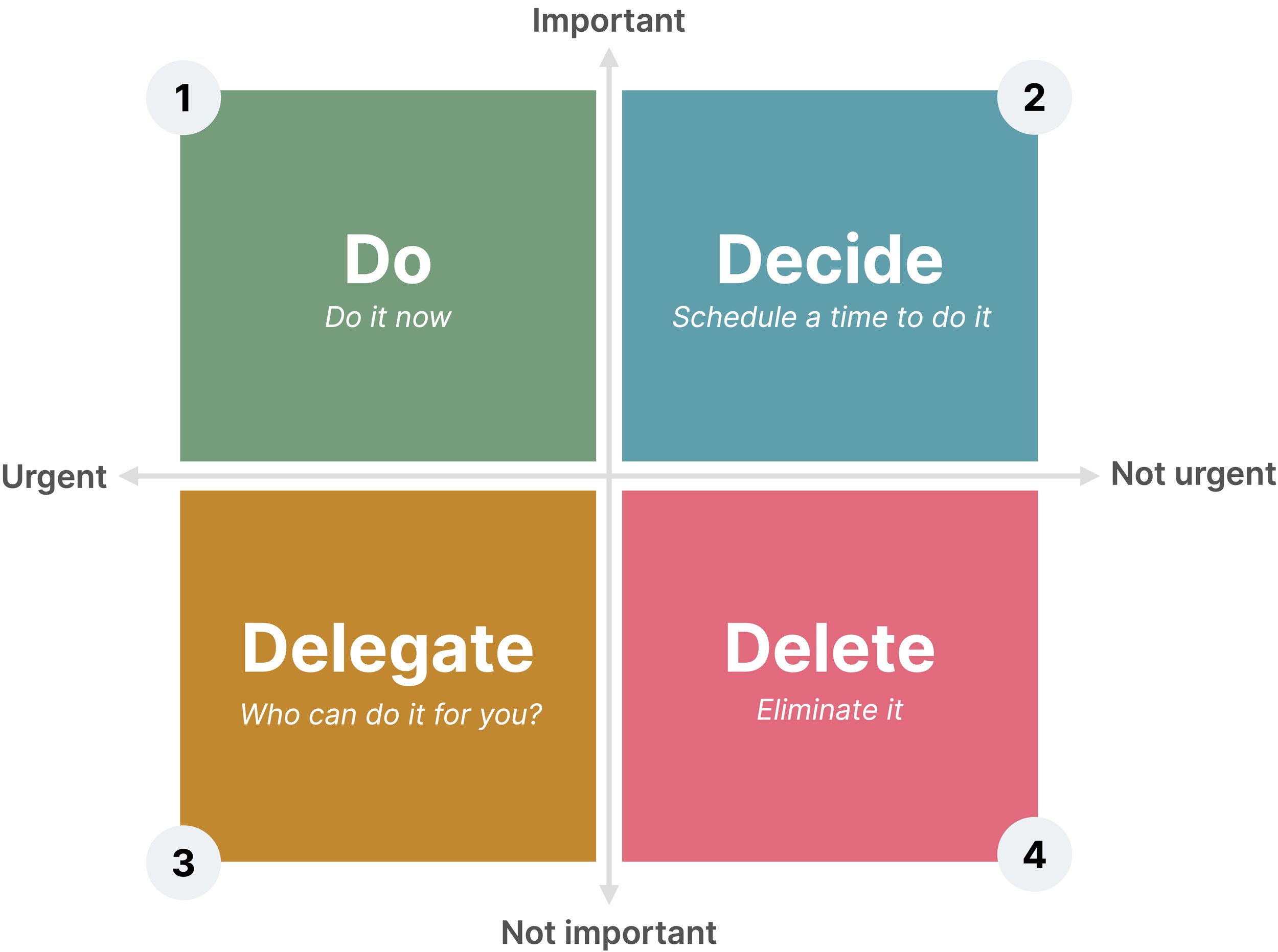
The Eisenhower matrix
And finally, if it’s neither important nor urgent, pipe up! Tell the boss that it’s not worth anyone’s time. Our time is a zero-sum game. The more time we spend on avoidable tasks, the less time we leave for meaningful work. And no, please don’t bend over backwards and say you’ll just work harder! Work at a natural pace and obsess over quality.
All this said, I know that treating your colleagues like the CEO is harder than treating the CEO like your colleague. If you’re being a kinder-than-necessary colleague, you should give yourself a gold star already. If you care about an egalitarian workplace, though, take a few steps in treating senior people like just another colleague.
If you find yourself applauding a boss’s point of view, that’s fine; but then force yourself to behave the same way with your average Joe and Jane colleagues. Avoid equating the value of people’s opinions with the size of their paychecks.
If you disagree with what they’re saying or doing, or have sharp questions to ask, don’t bite your tongue. Speak up. Even if they don’t agree with you, you may encourage them to examine the situation from a different perspective. That pause is valuable in and of itself.
Most important of all, respect your priorities and your work in progress. Most incoming work can wait, even if the request comes from an executive. And some work isn’t worth doing, even if a CEO requests it. Build the courage to refuse, reschedule, reflect and deflect work that comes from the top down.
If this post got you thinking, I’m curious about those thoughts. What sort of work environment encourages us to be courageous, and which work environments promote obsequious behaviour? Tell me in the comments.