
Summary
In the last few years, I’ve made minor tweaks to my life, to live a deeper life. A couple of months back, when my dad passed away, I reflected on the compounding benefits of these changes and how they’ve helped me savour life just a wee bit more.
I lost my dad in September of this year. He was 87 and ailing, so death was always a possibility, but I didn’t expect him to pass away when I was travelling. I ended up being a very different person from my dad. He was a loquacious man, and I’m a loner. He had a gift for languages, but I can’t even speak my wife’s mother tongue. My dad had boundless patience for people’s idiosyncrasies, and I can only aspire to be half as kind as he was. We also had different values and political inclinations. All that said, my dad was a massive influence in my life, and when he died, I needed time to swallow the lump in my throat. The days I took off work in the aftermath of my dad’s passing gave me space to reflect on what I value in life and to recalibrate how I live my days.
As I spent time with my family in those days, I was glad for a few changes I’ve made to my life in recent years. Those changes had already prepared me to handle loss with presence, not distraction. My wife, Gayathri, is perhaps the most critical catalyst for those changes. Had it not been for the new life we began together, I wouldn’t have stopped to wonder what matters most to me. With credit where credit’s due, let me tell you a few things I’ve done in recent years to cultivate a deeper, more fulfilling life. At work. At play. At home, and everywhere else.
Articulating my values
Some years back, one night, just as we were preparing to sleep, Gayathri and I discussed what we value in life. That discussion led me to write down my values.
😇 Peace of mind - maintaining a sense of calm is essential to me.
🎓 Learning - I enjoy the challenge of learning new skills.
💪🏾 Autonomy - I value being able to do things on my own terms.
⏳ Time - the biggest dividend any success can give me is more control over my time.
💙 Relationships - I have a few deep relationships and friendships, which I cannot and will not ignore.
Identifying values may seem like one of those mumbo-jumbo activities, after which you sing Kumbaya and hug each other, but my experience has been the opposite. I revisit these values now and then, and ask myself if I’m making choices that’ll help me make the most of my life. I don’t always make value-aligned choices, but knowing my values allows me to make better decisions each time.
Quitting social media
Once upon a time, I was big on social media. But I can’t stand the enshittified, infinitely scrolling social media that exists right now. I’ve not deleted my Facebook and Instagram accounts, but I’ve deleted the apps from my phone, so I have to access these platforms the hard way - using a browser. I maintain a LinkedIn profile for professional connections and to publicise the content of this website. However, I still blow hot and cold on LinkedIn, especially since the algorithm suppresses external content.
Messaging apps bother me as well. In India, WhatsApp is a hotbed for toxic conversations and fake news. So, as a policy, I don’t participate in WhatsApp groups. I have a few “friends-only” text messaging groups on Telegram, and those who don’t care about Telegram can always call me on my phone.
Getting off social media has had a profound impact on my mental health. I don’t crave validation through likes, comments, and shares. I’m also free from the toxicity and infinite time-wasting that these platforms facilitate – no online debates, no outrage, none of that. I’ll trade those interactions for an IRL conversation, a coffee, or a lunch, thank you very much.
Breaking up with my phone
Cal Newport talks about the ills of the phone as your constant companion. The urge to look at the shiny screen often gets the better of us. I’ve progressively turned my phone into a boring device. It doesn’t have any social media apps anymore, and I have limited access to communication apps, thanks to the rules I’ve set up in Freedom. There aren’t many interesting things I can do with my phone these days.
That apart, I’m doing my best to follow Cal Newport’s phone foyer method.
When you get home after work, you put your phone on a table in your foyer near your front door. Then – and this is the important part – you leave it there until you next leave the house. If you need to look something up, you go to your foyer and look it up there.
The friction of having to go to another room to access my phone has accelerated my breakup with it. The biggest benefits?
I read longer, without phone-induced interruptions.
I appreciate activities such as watching movies or having family meals without distractions.
Practising crafts for their own sake
I’m a photographer, and I write. I don’t even claim to be a good photographer or a writer. I use a camera and my keyboard as a creative outlet. My hobbies help me cultivate a fuller identity, and cultivate depth. Photography lets me savour life’s experiences more deeply. Writing helps me think and reflect. It doesn’t matter to me if I can’t monetise my photography or if no one reads.
Yes, I feel happy when someone appreciates my craft, but I practice it primarily because it makes me whole. I maintain this website, and sumeetmoghe.com for myself, and if someone derives value from my work, I take it as a bonus.
Speaking of bonuses, my crafts allow me to savour some experiences more deeply than otherwise. For example, my love for nature photography means I plan trips to remote places. Planning heightens my anticipation for the experience. When I get to the place, I experience the place through my camera and lens. I suspect I linger longer at every interesting sight and observe things as closely as I can to translate those sights into photographs. And finally, when I get back home, I relive the experience by processing images and writing about the trip. Each trip yields me three rich experiences, and the third stage often lasts for months and years.
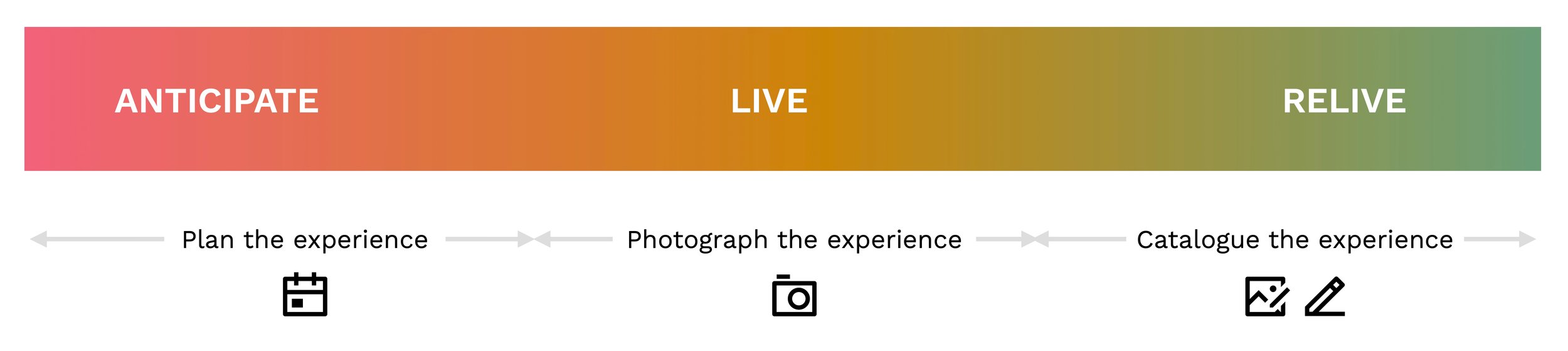
Savouring travel experiences thrice, through writing and photography
Appreciating art
The flip side of practising a craft is appreciating an art. My favourite art form is filmmaking, and while I’m no movie nerd, I’m a film buff. I like watching all kinds of movies, much like I love reading different types of books. Over the last few years, streaming platforms have helped me savour movies and high-quality series and widen my exposure to films.
Of course, like many others, I tend to binge-watch online content, so I have one rule I never break. Before I begin watching any video, I punctuate it with a few pages of reading. Reading calms my desire to rush for another dopamine hit. Since I have to earn each video by reading, I'm also more conscious about what I choose to watch.
Appreciating sport is also similar to enjoying art, but you must look past the win/loss columns and tribal loyalties. Take test cricket, for example. Played over five days, this format of the game is the ultimate mix of skill, stamina and strategy. Every spell of bowling and every break in play can induce a change in the game’s tides. Players counter challenges with tweaks to technique and strategy. The game is as much mental as it is physical. The weather matters, as do the conditions of the pitch and outfield. No sport takes so long to play and has so many layers. I may not be a historian like my friend Nag, but I love analysing the game, marvelling at its theatre and soaking in its culture. Chasing depth in cricket is an endless obsession, and I won’t be surprised if my friends and family dub me a test cricket addict.
Practising atomic habits
James Clear’s Atomic Habits is the most life-changing book I’ve read. The simple frameworks from the book helped me identify the habits that lead to the identity I want for myself. From language learning to reading and from exercise to throttling my media consumption, Clear’s cue-craving-response-reward cycle has helped me seek 1% improvements each day. I wouldn’t have written my book or set up this website, had it not been for James Clear.
Since habits are such a mundane and consistent part of our lives, my life has become more boring because of my atomic habits. Every day looks similar to the other. But as I’ve noted earlier, “boring is efficient”, and I get far more out of my life, being boring.
Reading every day
The most significant dividend from Atomic Habits was to rekindle my reading habit. Reading is declining worldwide, and there’s evidence that this decline is leading to a decline in human intelligence.
I read 60-70 books each year, now. I challenge myself to read books outside my comfort zone, so I bend my brain in new ways. Even if James Marriott is wrong about the effects of a post-literate society, reading books allows me to travel the world without moving an inch. My life is richer for the new stories, ideas, and perspectives I gain by reading a text from cover to cover.
Avoiding daily news
The corollary to reading every day is that I don’t follow the daily news in print or on visual media. Daily happenings seem more extreme than they do from a zoomed-out view of time. Learning about every bigoted act, or every debate on debased news channels, doesn’t educate me. If anything, I’m more outraged, stressed and upset when I consume daily news.
Instead, I get my news through weekly newsletters from sites like Axios and in-depth podcast episodes and long-form content from websites like Newslaundry, the Caravan and the Ken. Engaging with topics in-depth is less stressful and more educational than consuming an always-on newsfeed.
Nurturing relationships
I don’t have many friends. But I deeply value the few friends I do have. They’ll be around for me when I need them, and I’ll do the same. Thankfully, I have Gayathri in my life, who is more social than I am. She makes friends first, and then I inherit her friends. It’s a solid bargain.
Now, being off social media makes it harder to stay in touch with friends, but it forces me to do the things that I would have done if I weren’t on social media. My friend Nag and I speak to each other almost every day. Anuroop and I always talk about photography, and I love helping him with his video stories.
We (all credit to Gayathri) make a conscious effort to meet our local friends in person for coffee and lunch. And of course, there’s nothing that forges friendships more than travel. When we get a chance, we travel together to enjoy each other’s company and endure each other’s peculiarities!
Managing my sanity at work
Over the years, I’ve developed decent skills in prototyping, storytelling, facilitation, research and writing. I’m a reasonably skilful product manager, even if I didn’t start that way. Every year, I attempt to add new strings to my bow by learning something new and practising new skills and techniques. Having a few differentiated skills helps me have autonomy over my work and schedule.
I also have a shallow work budget - meetings, emails, IMs and busywork that need little or no cognitive capacity. I endeavour to limit these activities to 40% of my work week, so I can devote the rest of my time to creative work that adds value.
All this has meant that I position myself at work as a chef, not a restaurateur. I’m insignificant in the larger scheme of things, and that’s ok. I can focus on building resilient systems and teams in my absence and be confident that the work will continue when I need a break. No work emails over weekends. No meetings during vacations. None of that FOMO induced busyness.
Well, that's my quest for a 'deep life' in a nutshell – ten small changes that have made an outsized difference. It's about enjoying a full sit-down meal instead of a rushed drive-thru.
When I think of my dad now, I realise these practices didn't just help me process his death – they've helped me honour what I’ve learned from him: his patience, his presence with people, his voracious appetite for learning. If Parkinson’s and dementia hadn’t wrecked my dad, he may even have been proud of me.
None of these practices needed a dramatic life overhaul or monastic discipline. They were small redirections – phone in the foyer instead of my pocket, pages before videos, or an explicit value system. Looking back a few years since I began this shift, I realise how much has changed without feeling like a sacrifice. The 1% changes definitely add up.
So, tell me – what's your secret to making life feel more meaningful and less frantic?