
In 2026, win the battle of depth for your team

Summary
Cybernetic collaboration with AI is making us conflate speed and productivity. There’s no alternative to deep focus, even if AI promises to create outputs at “warp speed.” In 2026, leaders will serve their teams best by creating a work environment conducive to deep work. In this article, I discuss a few ideas to foster such an environment.
Setting the right example by eschewing back-to-back meetings
Making standard workflows explicit in the team
Defining the purpose of each communication channel
Embracing reading and writing as bona fide thinking mechanisms
Employing written artefacts that explain your team’s work
Designing nudges within your team’s workflows that promote deep work
Write a prompt. Get an output. Shove that output into another prompt. Generate another output. Daisy chain prompts and outputs, and you have yourself an agentic workflow. Push a button, and voila! Job done. Who needs to think anymore?
You may debate the quality of generative AI’s outputs, but you’ll accept that it creates outputs faster than human beings. High-speed delivery leads to a high rate of change. If you are “good at AI,” you’re also in a “battle against entropy.” You’ve won the speed battle, but now problems emerge faster, too. For example, your team ships new features in days, but your collaborating teams can’t stop pinging you because the edge cases are piling up faster than you can reason about them.
Outputs exist on a computer screen, but outcomes exist in the real world. And real-world problems don’t disappear when you hit the “generate” button. If anything, you generate them faster than your team can absorb and understand.
Dealing with real-world problems takes depth – critical thinking and cognitively demanding work for hours at a time. But the button-press nature of generative AI is training us out of such depth. Combined with meetings and RTO mandates, it’s making deep work an even scarcer commodity in the workplace.
But if you’re a reader of this blog, then you perhaps value deep work as much as I do. If you lead a team, I hope fostering a high-performing team environment is a top priority for you. And if those two assumptions are correct, I have a few pieces of advice you can take into 2026.
Set the right example
You are what your people will want to grow up to be. If they see you sprinting from call to call, they’ll assume that’s what leadership looks like. And I guarantee they’ll imitate your behaviour. To promote deep work, you’ll have to do some of it yourself. The rule applies to every level of leadership – even the executives. Busyness is not a badge of honour. As Tom DeMarco said in his book Slack,
“When companies can’t invent, it’s usually because their people are too damn busy.”
Charity begins at home, and deep work starts at the top. I suggest creating a predictable shape to your week. For example, you could practice “meeting-free Mondays” or “Fridays for Focus”. Use such uninterrupted blocks of time to execute cognitively demanding work for your team. Choose tasks that, if you execute with high quality, will create disproportionate value for your colleagues. Isn’t that what leadership is about? Excellence is contagious, and when leaders obsess over high-quality work and set aside time for it on their calendars, they signal what they expect from their team.
In fact, no one except the C-suite should have more than 16 hours of meetings in their calendar each week. That’s no arbitrary number – it’s 40% of a work week! Surely that’s enough shallow work in addition to meetings and instant messages. If you can bunch those 16 hours into, say, the second half of each day, you can build a daily rhythm for deep work. Coordinate those deep work slots with the rest of your team to create a deep work culture.

By blocking mornings and a full day for deep work, you protect your focus for 60 hours each week
Take away the guesswork
Too many teams leave their ways of working to imagination. As a result, each time they encounter a new piece of work, they must dream up the process to execute. This wasteful cognitive load lives rent-free in people’s heads. As a leader, your job is to evict that cognitive load and replace it with simple, repeatable paths.
What does that mean in practice? For each standard piece of work, define the workflow. Software development teams already have sensible defaults for such work, in tools like Jira. If your team’s jobs aren’t as standardised, then spend some time building those standards.
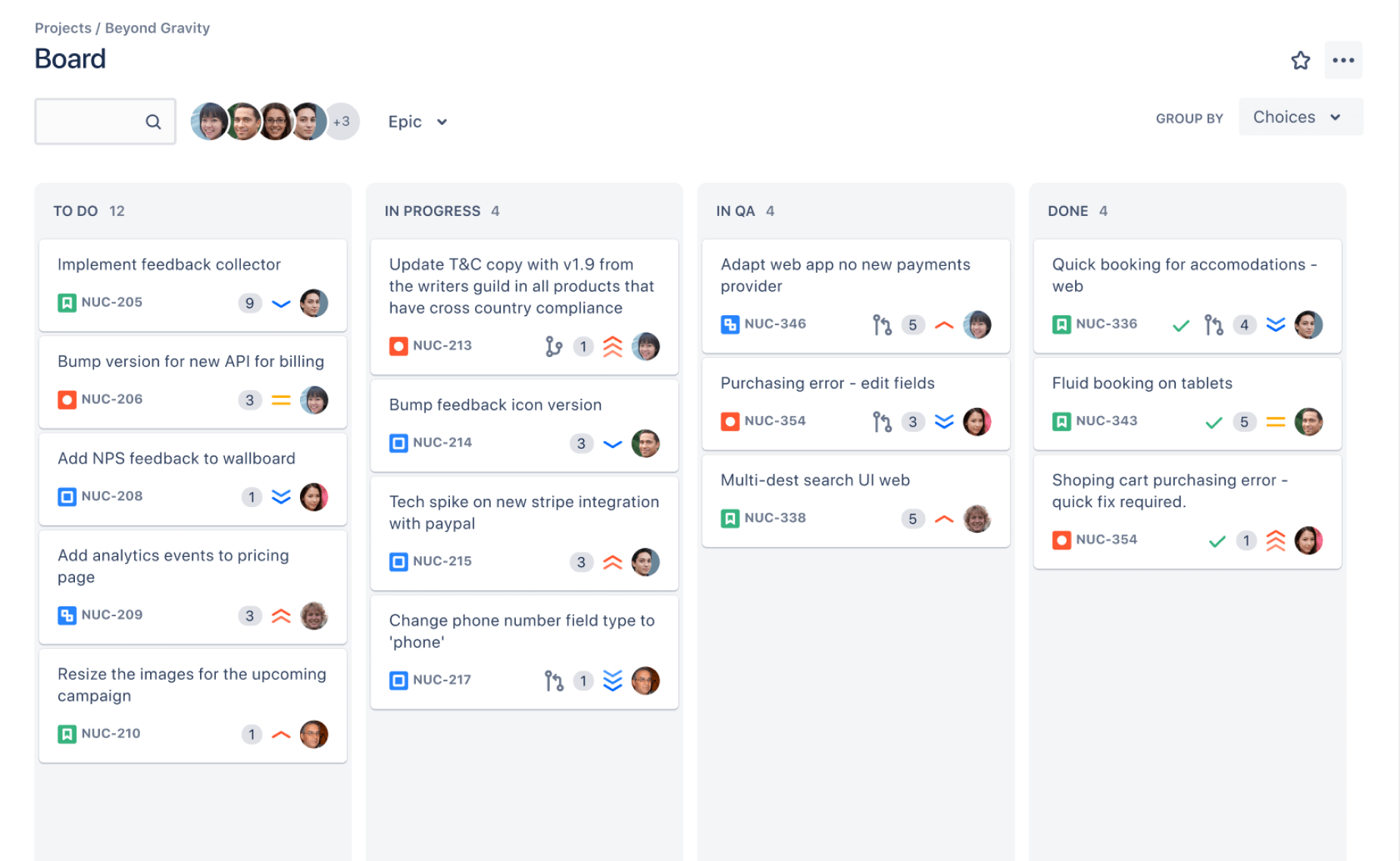
Inevitably, you’ll encounter new, atypical work, which doesn’t fit your standard workflow. That’s OK. Address the challenge, then reflect on how you executed the work to define the workflow for next time.
I can’t stress how important it is to define workflows. In his book, “A World Without Email,” Cal Newport argues that while you should let knowledge workers decide how they execute work, workflows shouldn’t be laissez-faire. Not knowing the standard process for implementing a task leads people to the lowest common denominator of “collaboration” – a hyperactive hivemind characterised by meetings, instant messaging, and email.
“Workflows, on the other hand, should not be left to individuals to figure out on their own, as the most effective systems are unlikely to arise naturally. They need instead to be explicitly identified as part of an organisation’s operating procedures… The key is to find ways to minimise context shifts and overload while still getting done what needs to get done.” - Cal Newport, A World Without Email.
Define the purpose of your communication channels
In the modern enterprise, every team has multiple communication channels at their disposal. That may sound like a good thing, but this proliferation of communication channels creates more confusion than clarity.
In my research, I’ve found that the average knowledge worker experiences 18 interruptions a day from the hyperactive hivemind of meetings, email and instant messaging. Some knowledge workers live exclusively in these tools. In fact, you may discover that the more senior a worker, the more they live in these tools and PowerPoint. More on PowerPoint in a bit, but first, let’s address the issue of interruptions. Surely, you don’t want your most skilful colleagues to erode their focus across such an interrupted schedule!
The most significant gift you can give to your team is to take the “instant” out of messaging. Use tickets on task boards to convey status and to organise discussions about work. Use instant messaging for announcements or short, one-on-one exchanges. Any more than five back-and-forth messages is a trap that could lead to an all-day meeting. Schedule a proper meeting for a hearty, real-time back-and-forth instead.
Similarly, audit every other communication medium at your disposal and agree on how you and your team will use them. You’ll find a sensible default in this article from a few years back. The idea, as we discussed earlier, is to limit context switches and interruptions so people can buy back large swaths of time for deep work.
Embrace your literacy
Sorry, I must be direct. Reading is in decline. And the decline in reading is making us dumber. The AI button press isn’t helping.
Someone presses a button to generate a deep research report.
They pass it on to their boss, without bothering to read it or verify it.
The boss doesn’t read and instead asks a chatbot to summarise it for them.
They then pass on the chatbot’s summary to someone else who acts on the interpretations.
Before you know it, the dominoes of shallowness are crashing into each other.
I also promised to return to the problem with PowerPoint. Or Keynote, or Google Slides, Canva, what have you. Too many managers, leaders, and executives throw the stuff in their heads straight into PowerPoint. The tyranny of poorly written bullet points and slideuments aside, these “decks” don’t clarify anyone’s understanding. There’s too much left unsaid in the undocumented speaker notes of a slideshow. Indeed, the fragmented style of documenting topics on slides shows up in the lack of shared understanding across many knowledge-working teams.
None of this is to say that you shouldn’t ever build slides. I make slides all the time, but only to present a topic, not to write up a concept. To write up concepts, create a short, sharp, linear document. Nothing stops you from going to a slide to create a diagram, as I’ve done in the example below. Pausing to create visuals this way helps you identify the key visuals that enrich your explanation. More importantly, writing helps you unpack and sharpen your arguments, so when you speak about them, you’ve already had a lot of practice.
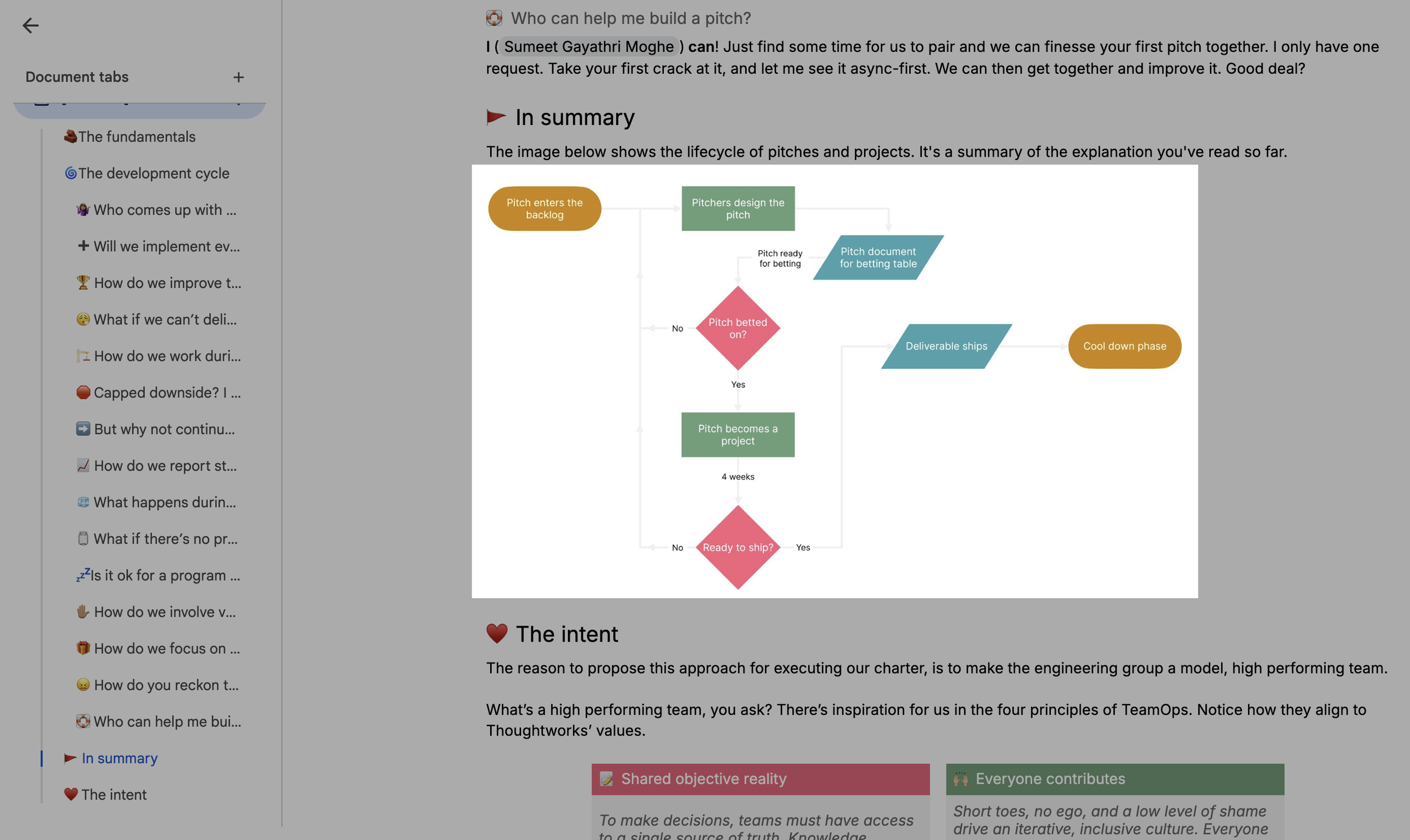
Use slideware to create graphics that bring your documents to life
The corollary, of course, is that you must also retain the discipline to read. When your colleagues trust that you’ll read stuff they send your way, it’ll encourage them to construct coherent ideas in writing and avoid the meeting and IM-centric workstyles that plague the corporate world. To keep your reading muscle strong, read books. As a bonus, you’ll keep your brain sharp too!
James Marriott argues that certain kinds of complex and logical thinking simply cannot be achieved without reading and writing. He quotes Neil Postman, who once said,
“To engage with the written word means to follow a line of thought, which requires considerable powers of classifying, inference-making and reasoning.”
I can’t agree more.
Employ written artefacts to combat FOMO
People stuff their schedule with meetings, messaging and email for two reasons:
Their managers equate presence with productivity.
They harbour the fear of missing out (FOMO).
If you’ve read this far, you know that presence and productivity have little to do with one another. Which brings us to FOMO. People want to attend every meeting because they don’t know if their teammates will keep them abreast of what happened in the meetings they missed. Before you know it, you observe an inane sequence of events.
A meeting to discuss a meeting in the future.
The meeting itself
A meeting to debrief others about the meeting they missed.
Another meeting to tie up loose ends from the debrief.
And so on. Before you know it, the rolling snowball of meetings becomes an avalanche. Much of this inefficiency is easy to curb. Decision records, meeting notes, idea papers and explainers help us delegate the meat and potatoes of communication to the written word. Of course, there’ll be situations where the written word is inadequate, but the beauty of writing is that it’s easy to update and enhance. Once you’ve written something up, you can share it many times and replace meetings and instant messaging with a link to the written artefact.

The DEEP acronym helps you remember what you must document on distributed teams
Since LLMs are excellent at summarisation, they make for able navigators for such artefacts. For example, if you have a tool like Glean, you can ask it to summarise the meetings you may have missed, and it’ll get you up to speed in minutes. The prerequisite, of course, is that you document every meeting. Do it. Please. Save your team from thrashing around.
AI can be an effective tool to summarise a team’s audit trails
Build nudges for depth
As a leader, you design your team environment for success. Part of that design involves planting nudges for desired behaviours. For example, when you set up a transition on Jira that requires a comment before changing a task’s status, you’re “nudging” your colleagues to explain what they’ve done to move the task along the workflow. Similarly, a silent meeting – where people quietly read and comment on background information before a real-time discussion – is a nudge towards building a reading habit.
Capping meeting hours is a nudge. I’ve previously written about forcing functions to drive more effective meetings. I encourage you to read Thaler and Sunstein’s incredible book – Nudge – to learn about the different sorts of nudges you can employ.
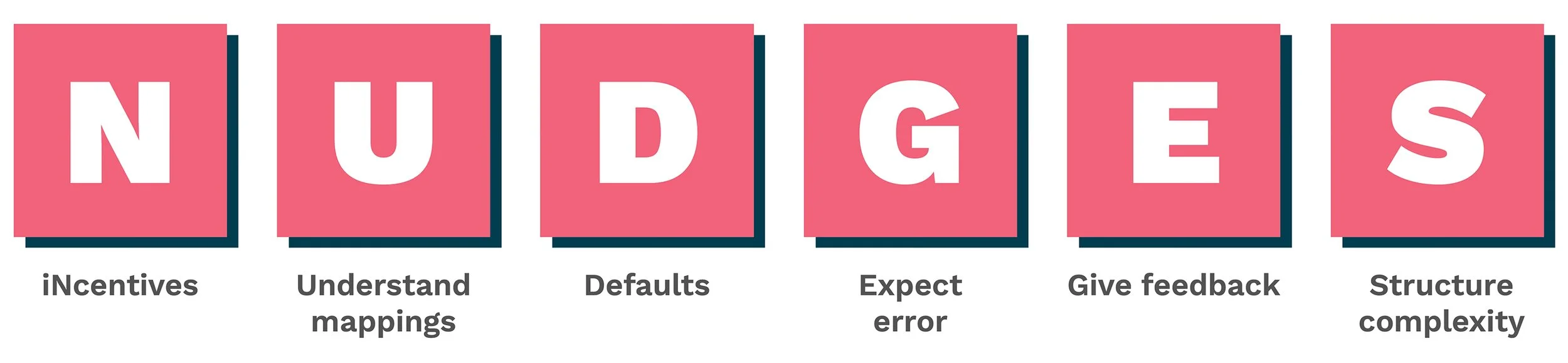
You can employ different nudges to drive desired behaviours
But here’s a nudge for you, dear leader. Avoid back-to-back meetings as if that’s your job. Each time you get a meeting invite, block 15 minutes right after it, to reflect on what you must do next. If you were the host, this is the time to share those meeting notes. If you can’t figure out subsequent actions for yourself, then this is precisely the sort of meeting you must never attend. That’s a design bug in the meeting, not a flaw in you. Remember, the smaller the meeting, the more effective it is. So, by sitting one out if you don’t expect to contribute, you’re only serving your colleagues.
If, despite your best effort, you find yourself in back-to-back meetings, block an hour at the end of the day or the beginning of the next day for reflection. And make it a point to ask yourself how you can avoid such days in your schedule.
Let’s assume that 2026 sees the same frenetic energy around AI as the last few years. Even so, using AI as a quick path to speed and volume is fraught with risks. AI work slop is the newest avatar of pseudo-productivity and shallow work. Indeed, collaborating with an AI chatbot on your screen doesn’t produce the same intense focus as “the whiteboard effect” of pair-programming with a colleague.
Debates about the usefulness of AI aside, the deep-working team will consistently outperform the team that’s wading in the shallows. With AI, they’ll show better taste and discernment. Without AI, they’ll apply their skills with more rigour. As a leader, it’s your responsibility to free your team to focus. Your real job in 2026 is not to push more AI buttons – it’s to protect the space where deep work can happen. Good luck for the new year. I hope you hand your team the gift of depth!