
AI is the answer. Now, what's the question?
Summary
We’re still in the age of AI theatre. Output quality and results still seem to matter less than “AI adoption.”
My friend Eesha told me a strange story. A colleague of hers shared some AI-generated content with their large team. If I am to believe Eesha, the content wasn’t slop. It was worse! I pity poor Eesha because she made the mistake of reading my blog post about being militantly human and paraphrasing my words to her colleagues.
“The moment you produce the one-click-and-you-are-done kind of AI-generated content, you’re telling your consumers that you don’t care enough. That the message, the story and your relationship with your audience aren’t important enough for you to invest creative labour. You lose all pretence of authenticity the moment you make an AI avatar your proxy and the moment people see a profusion of em dashes in your writing.”
In a normal world, people might have seen the logic in Eesha’s feedback. Instead, Eesha got massive pushback. Her colleagues chided her for not appreciating the use of AI in their team. “Aren’t we trying to encourage everyone to use AI? How will people feel about adopting AI when they hear this feedback?” said one colleague. “Sure, some situations need a human, but most things can be AI-first,” said another. Eesha found herself in an intellectual corner.
There was a time when you could be objective about the quality of an output. Results mattered. Today, it almost seems that in some situations the output doesn’t matter, as long as you used AI to produce it. And this is after the era of token-maxing, after the FOSE unconference spoke about being “conspicuously human.” Heck, I even heard Steven Bartlett say something similar on Diary of a CEO.
“A simple example people will relate to: if you use ChatGPT or Claude to make your LinkedIn posts, they will be poor LinkedIn posts, because everybody else is using them. And a great LinkedIn post now is from someone who doesn’t use them and makes something that’s irreplaceably human, deeper and more personal, an “n of 1” lived experience — all the things AI can’t do. And I think that’s a compelling argument: that actually the commodity tools produce commodity outcomes.”
Militantly human, conspicuously human, irreplaceably human — these are all similar sentiments. In an age where everyone can press buttons, button-press outputs don’t cut through the clutter. Authentic, high-quality human content does. Yes, there’s a bit of availability bias at play when I come across all these similar sentiments, but the logic is hard to argue against. And yet, it seems that our workplaces are arguing against that logic, however poor their arguments may be.
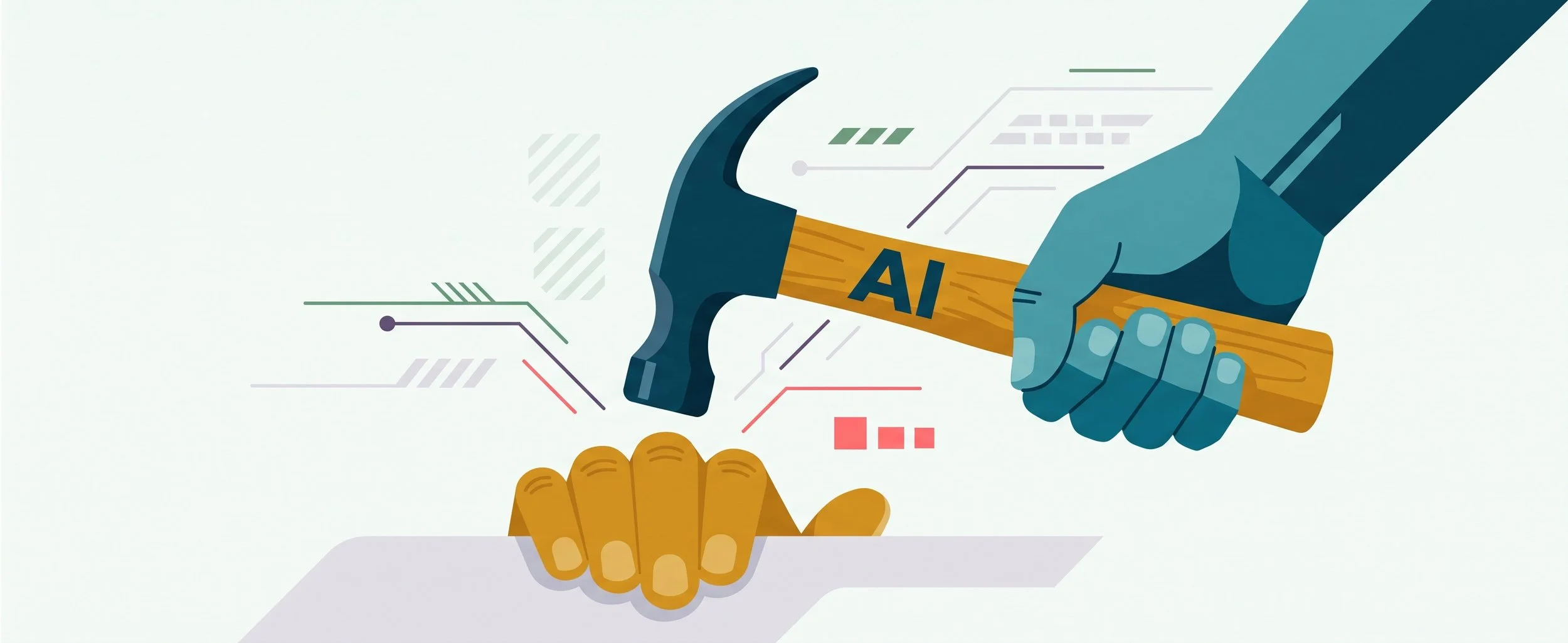
It seems that we’re still in the era where it doesn’t matter what the question is. AI is the answer. It’s the veneer for poor outputs. It's speed over substance. It’s the tool over the outcome. It’s the hammer looking for a nail. Use the hammer, and all will be well.
It’s time to be buzzword compliant. Agentic for the win. Autonomous? Yes! Did you orchestrate autonomous agents? Oh mate, can you adopt me already? How are you such a genius? Oh, and results be damned. Quality? Ah, we’ll let an adversarial agentic workflow take care of that.
So, yes. For a while, we’ll all have to create our MacGyveresque workflows to run our own AI theatres. We’ll also have to applaud every use of AI, good or bad. And, if possible, do our jobs on the side. Sigh!